Output without relevant project context.
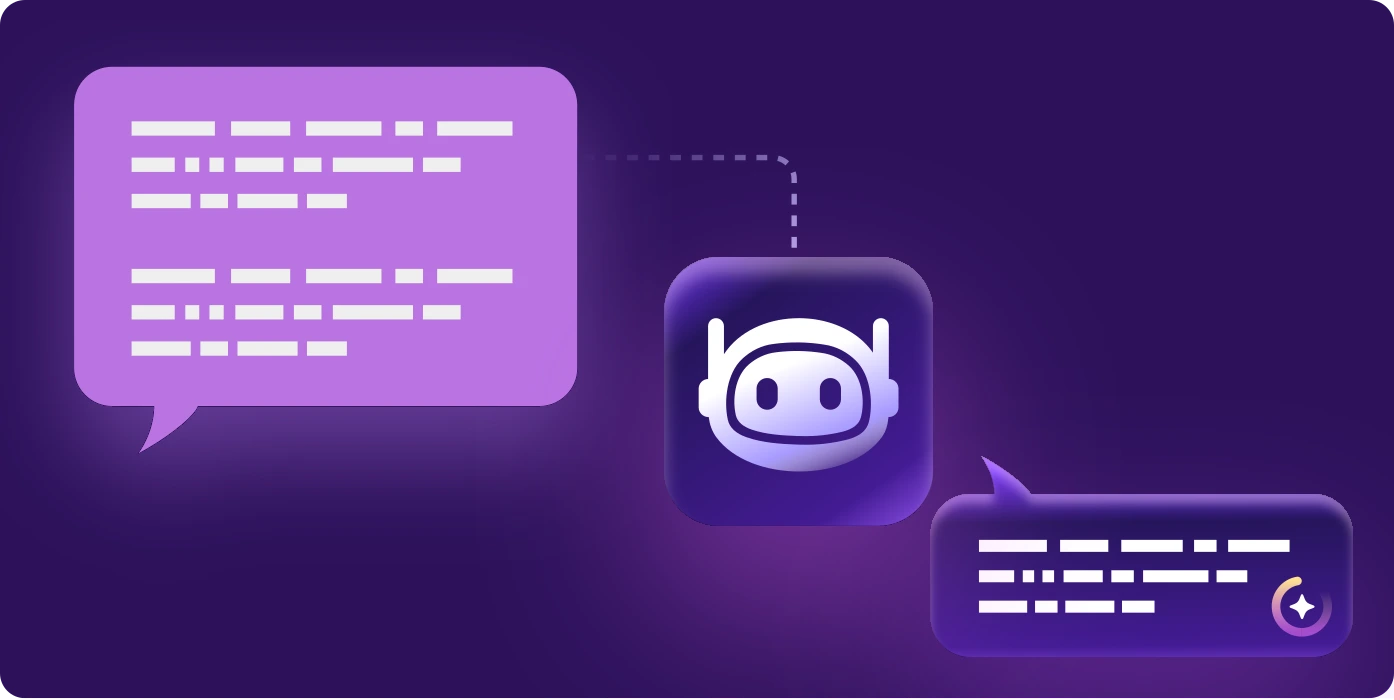
Generic AI misses character voice, in-world terminology, and the rules each language needs.
'We need Brazilian Portuguese for all quest and dialogue content in Shadowfall.' That's the whole setup.
The agent turns your request into a kit: the full set of instructions and language-specific rules, in bullets you can read and edit. Change anything; it updates on the spot.
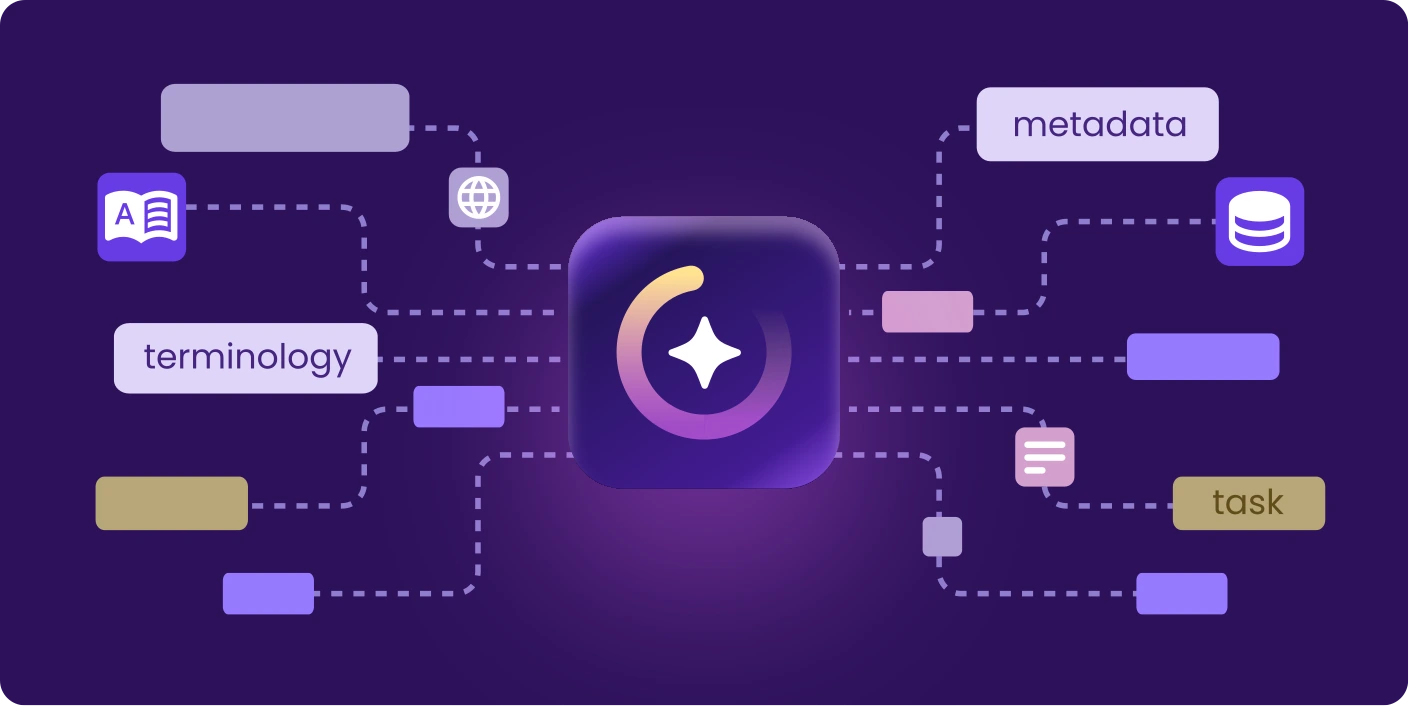
Glossary terms, TM matches, style rules, and project references get pulled into each string's prompt. Nothing to prepare manually.
Run a sample, check the output, adjust the rules. Bad instructions get caught on 50 strings, not 40,000.
The agent processes the full volume and delivers output into your Grid, ready for review, with AI-generated work tracked separately.
Next week's strings land and the same kit runs again. No setup, no re-prompting. Steps 1 to 4 happen once per project, not once per release.
Character bios, glossaries, and tone-of-voice guides assembled into each prompt. Output that reflects the game’s identity, not a generic translation.
European Spanish exists; Latin American Spanish is needed. The agent carries over what holds and adapts only what changes. A new variant at a fraction of a retranslation.
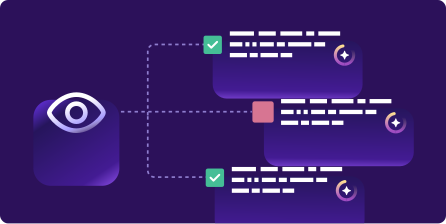
All translations complete. The agent reads every version and flags where one language's meaning drifts from the others.
Translators post-edited AI but never logged changes. The agent documents why each string changed, across all languages, in bulk.